

The most common complaint from foreign sales teams selling into Qatar is not that they lose deals. It is that deals neither close nor die. They sit. Calls go well, the proposal is received warmly, everyone is positive, and then nothing happens for weeks.
That pattern is rarely a sign the deal is lost. It is usually a sign the process moved somewhere the seller cannot see.
Why do Qatari B2B deals take longer than expected?
Because the decision is usually made through relationships and internal consensus rather than through the formal process the seller is running, and building that relationship takes time that most foreign sales forecasts do not allow for.
A pipeline built on the assumption that a good demo advances a deal will consistently forecast wrong here. The demo is not what advances it.
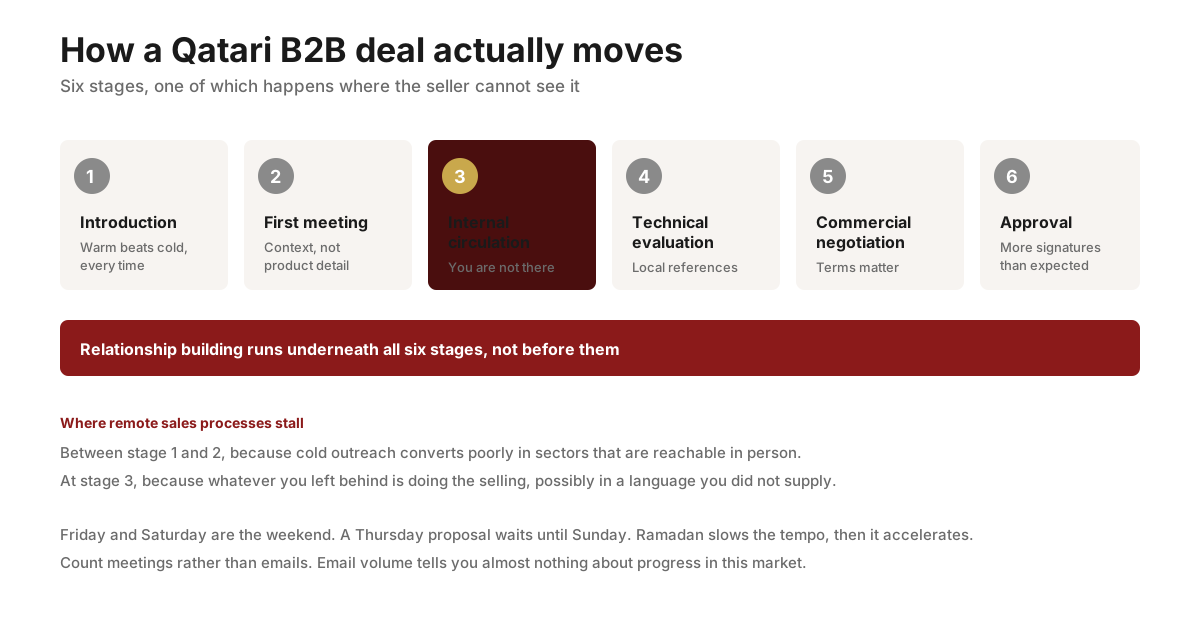
The stages, and what is really happening in each
Introduction. How you arrive matters more than what you arrive with. A warm introduction from someone the buyer already trusts starts the conversation several steps ahead of a cold approach. This is why a verified contact list is worth more than a large one, and why our clients tend to spend their first weeks mapping who knows whom rather than dialling.
First meeting. Often shorter on detail than you expect and longer on context. Who are you, who else do you work with, are you going to still be here in three years. Foreign sellers frequently mistake this for small talk and try to accelerate into product. That reads as impatience, and impatience reads as someone who will not be around for the long term.
Internal circulation. This is the invisible stage, and the one where remote sellers lose control. Your proposal is discussed among people you have not met, in meetings you are not in, quite possibly in Arabic. Whatever you left behind is doing the selling for you. If it is an English-only PDF full of assumptions about your home market, it is not doing it well.
Technical evaluation. Specifications, compliance, references. Straightforward and familiar, though local references carry disproportionate weight. A client in Doha counts for more than a much larger client somewhere else.
Commercial negotiation. Expect it to be genuine, and expect payment terms to matter as much as headline price.
Approval. May involve more signatures than the org chart suggested. Larger organisations, family groups and anything touching the public sector will have their own rhythm here.
The things that reliably slow a cycle
The weekend is Friday and Saturday. The working week runs Sunday to Thursday. A Thursday afternoon proposal sits until Sunday, and a European team sending on Friday has lost most of a week before anyone reads it.
Ramadan changes the tempo. Working hours shorten and decision making generally slows, then picks up sharply afterwards. Plan around it rather than being surprised by it.
Arabic is not optional at every level. English is widely used in Qatari business, but a proposal that can be presented in Arabic when the room prefers Arabic removes friction at exactly the moment you are not there to remove it yourself.
Distance itself. A supplier who visits is a different category of supplier from one who calls. This is the single most consistent difference we see between deals that stall and deals that move.
Where remote sales processes break
Look at where your own pipeline sticks and you will usually find it is one of two points.
The first is between first contact and first meeting. Cold email and cold calling convert poorly here compared to markets where they are normal. Sectors like construction, healthcare and hospitality in particular are far more reachable in person than by phone, which is what outdoor sales visits exist to solve.
The second is internal circulation. You cannot attend those meetings, so the only lever you have is who is representing you inside the building and what they are working from. A local representative who can answer a question the same day, in the right language, is worth more at this stage than any amount of follow-up email.
What this means for forecasting
Three practical adjustments.
- Lengthen your assumed cycle rather than treating a slow deal as a lost one. Deals here often close well after a foreign forecast has written them off.
- Count meetings, not emails, as your leading indicator. Email volume tells you almost nothing about progress in this market.
- Treat the first sale as the expensive one. Once you have a Qatari reference client, the second and third are materially easier, because the trust question has an answer.
Related reading
- Selling in Qatar without setting up a company, the four routes to market
- Distributor, agent, or your own sales team, and who ends up owning the customer
- Qatar business growth, the wider practical guide
This article reflects general commercial practice observed in the Qatari market. Individual sectors, particularly regulated ones and public sector procurement, follow their own processes.
Red Rock Directory runs the outreach, the meetings and the closing for international companies in Qatar. See how our sales team on the ground works, or talk to our team.